



Blog
How to Choose the Perfect Natural Clay Ganesh Idol for Your Home

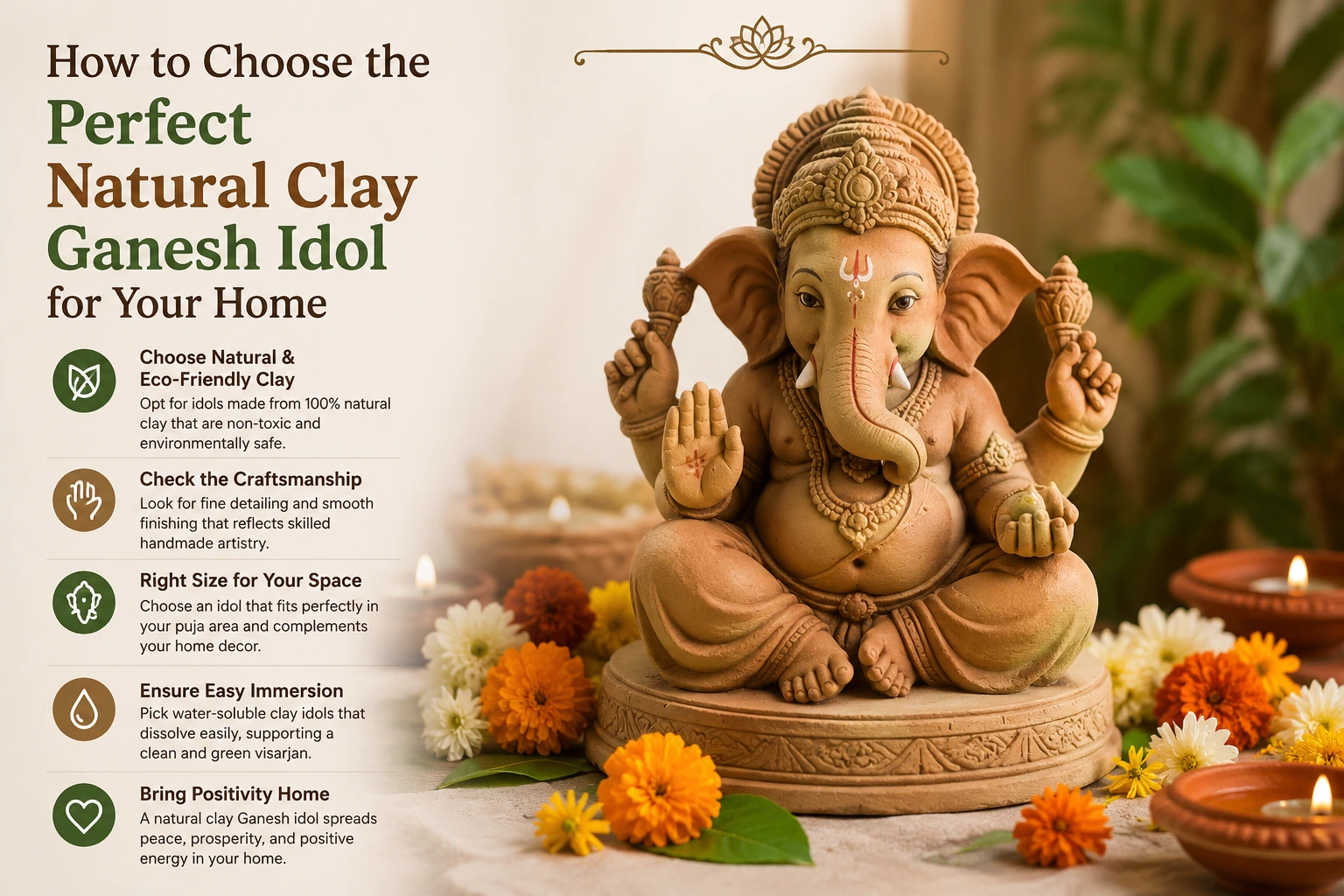
In today’s time, genuine Ganesh idols are built from raw, unbaked earth. Clay creates specific physical properties. An authentic clay idol is notably heavier than a plaster cast of identical dimensions. The surface texture remains porous and matte. Unbaked clay reacts instantly to water and dissolves into a completely flat layer of mud within three hours of submersion. On the other hand, plaster does not dissolve.
Surface pigments require separate verification. A clay Ganesh idol uses plant-based dyes or raw earth colours. These organic materials dry to a flat, chalky finish. High-gloss sealants, neon colours, and metallic borders indicate synthetic acrylics. Chemical paint acts as a waterproof barrier. It slows the melting process and leaves a layer of toxic plastic film in the soil after the clay core collapses. Clay idols are safe. Below, you will learn how to choose the perfect natural clay Ganesh idol.
Factors to Consider When Choosing a Natural Clay Ganesh Idol
1. Clay Composition
Plaster of Paris shows up often in idols still marketed as “eco-friendly,” and that substitution undoes the entire point of buying a natural clay Ganesh idol. Real clay dissolves fully in water within a short period. A POP-blended idol instead breaks into chunks that sink and sit on a riverbed or lakebed for months afterwards.
Texture and weight give it away. Natural clay feels rough and slightly grainy, heavier than its size suggests. Plaster of Paris feels smoother, almost plastic, and noticeably lighter. Asking a seller directly about material composition and requesting any certification available settles what texture and weight alone sometimes can’t confirm about the material.
2. Paint and Colours Used
Chemical dye on a clay Ganpati murti carries the same problem a Plaster of Paris body does. Several harmful chemicals can form a layer on the pigment. Once the idol dissolves in a river or lake, that runoff reaches the water and the soil around it. Vegetable and mineral-based dyes avoid this, breaking down without residue.
A few drops of water expose the difference within a minute. Synthetic dye bleeds colour. However, natural pigment does not. A buyer can request this test before purchase rather than taking a promise from the seller. This simple check can help confirm whether the colours are as natural as the material itself.
3. Size and Immersion Method
An idol too large for a home water tub or bucket ends up either dumped whole into a natural water body, undoing the entire point of choosing natural clay, or sitting half-dissolved in a corner of the house for weeks. Sizing an idol against the actual space available for immersion at home matters more than sizing it against wall space in a living room.
Smaller idols in the one- to two-foot range dissolve fully in a bucket of water within a day or two, leaving nothing but soil that can go straight into a garden. A large idol bought without a plan for where it will dissolve usually ends up back in a river anyway, regardless of what material it was made from.
4. Detailing and Craftsmanship
A Ganpati idol for home stays within arm’s reach for the whole festival, unlike a pandal idol seen from across a hall. The crown, the curve of the trunk, the hand gestures, all of it holds up under a kind of scrutiny a distant idol never faces. The smaller setting makes these handmade details much easier to notice and appreciate.
A slightly uneven curve or imperfect line shows that the idol was shaped by hand rather than made from a mould. Kanchan Shree International sources idols that are shaped professionally by hand. The uniqueness gives an idol its own character rather than a perfectly uniform finish.
5. Accessories and Ornamentation
Plastic jewellery, glitter, and synthetic flowers glued onto an otherwise natural idol undo the point just as much as chemical paint does. These add-ons rarely dissolve. They float in a river or lake long after the clay body has already broken down. Buying an eco-friendly Ganesh idol means checking the accessories, not just the body underneath them.
Cloth, dried flowers, and natural fibre decorations dissolve or biodegrade alongside the clay. Nothing collects on a riverbank afterwards. Checking the dress of the idol catches a detail a quick glance misses many times.
6. Seller’s Certification and Track Record
A seller claiming natural clay without proof asks a buyer to take that on faith alone. Certification from a recognised environmental body confirms material composition, dye source, and biodegradability, both for the idol and whatever it’s dressed in.
Past reviews matter just as much as a certificate, particularly ones mentioning how an idol actually dissolved. A seller with years of consistent feedback on that point carries more weight than one making the same claim for the first time. Look for feedback that gives clear details about the idol’s material, finish, and immersion experience.
7. Price Against the Material
A natural clay idol usually costs more than a Plaster of Paris idol, since hand-shaping and drying take longer than pouring a mould. A price close to a mass-produced Plaster of Paris idol may be worth questioning because the material and labour behind a genuine clay idol rarely allow for that kind of pricing.
Regional differences also affect price. Hence, comparing across sellers in the same city gives a more accurate baseline than comparing across states. A buyer paying well under the local rate for natural clay is often paying for something other than what the listing claims.
Conclusion
Material, paint, size, craftsmanship, accessories, seller history, and price all answer the same underlying question about a clay Ganesh idol. That question is whether the idol dissolves the way it is meant to, or merely looks like it will. Each of the seven checks carries its own weight in answering that question. Overlooking even one can undermine the value of the other six.
Kanchan Shree International builds every idol after satisfying all safety checks. That standard extends to details a buyer might not think to ask about on their own. Ultimately, every idol should be shipped with its material composition and dye source confirmed in advance. This gives buyers a clear idea of what they are receiving before the idol reaches their home.
One thought on “How to Choose the Perfect Natural Clay Ganesh Idol for Your Home”