



Blog
Celebrate Sustainably with an Eco-Friendly Ganpati Idol Made from Natural Clay

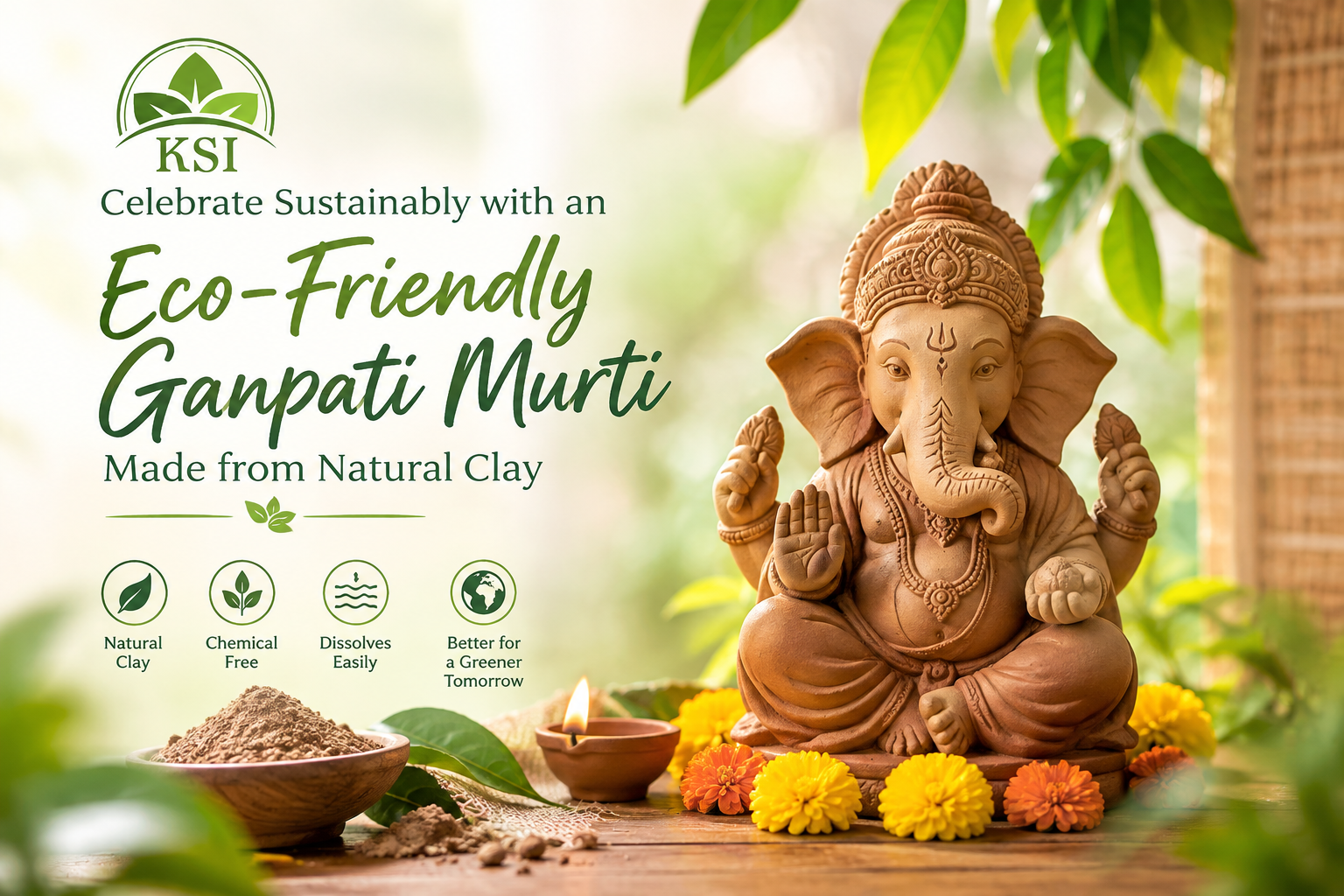
There are a lot of individuals who select the face first while picking out a Ganpati idol. Several look toward the posture; some look at the dimensions or the ornamental elements. Material is often overlooked but it is when the celebration is over and the immersion phase of the family norms that it becomes significant. In the case of an eco-friendly Ganpati murti that is composed of natural clay, a buyer receives a closer look at that part of the choice.
Craftsmen have been using clay for an extremely long time. When wet, it can be pressurized, moulded, and formed as required, and then dried before the last step commences. A lot of the detail you see on a custom-made idol is the result of that technique. A little difference in consistency here or a not-quite-perfect line there isn’t uncommon. Below is how to celebrate sustainably with an eco-friendly Ganesha idol that is made of clay.
How to Celebrate Sustainably with an Eco-Friendly Ganpati Idol Made from Natural Clay
1. Check the Material First
What is the idol constructed of? A seller needs to know. Talk about the primary body, the interior of the item, and anything that was incorporated into it in its normal form. Some things are easy to hide after the painting of the idol.
Treatment of the surface is another thing. Find out what colour has been used and if the idol has been coated afterwards. Those answers are more valuable than a product label alone for anyone looking specifically for an eco-friendly Ganpati idol that is composed of clay.
2. Clay Can Carry Detailed Work
There’s plenty of potential for subtlety with the clay. A craftsman may operate on the face, trunk, hands, crown, jewellery, and creases in garments while the substance is still supple. A clay idol doesn’t have to appear plain or abandoned.
Traditional designs can take various shapes. Clay can be used to create seated Ganpati idols, standing figures, as well as a variety of ornamentations. Selecting clay is an option you can choose that does not prescribe a specific design.
3. Consider the Immersion Before the Purchase
By the moment the absorption day arrives, the statue has previously spent many days at home. Natural clay melts and dissolves in water more easily than materials that are synthetic. For example, plaster may be synthetic. That distinction is significant when full immersion constitutes a component of the ritual.
Paint as well as coatings can influence what occurs to the outside surface. A vendor must be able to describe what was added after the clay Ganesh idol was created. Understanding this ahead of time allows you to in order to avoid making assumptions after some time.
4. Look Past Broad Labels
“Eco-friendly” might signify several things depending on the product page. Unless the materials are stated, the word does not provide much information about the idol’s physical form. This is a thing that most people ignore when making a purchase.
A decent product label should include the clay, colours, and texture. It should also detect any non-clay components. When certain facts are absent, it is safer to inquire with the vendor directly about the goods. If you want genuine Ganesha idols, contact Kanchan Shree International.
5. Handmade Pieces Carry Small Variations
Handcrafted clay creations have distinct characteristics. The surface could have more roughness toward the base, one decoration may change slightly from the next, and the design might not be similar on both sides.
Such discrepancies are common in work done by hand. They can also help one idol stand out from another produced from the design that is similar. Buyers who respect traditional craft may find the appeal that is uneven.
6. Choose a Size That Fits the Space
Start by actually measuring the spot you have in mind, rather than guessing at it from across the room. The eco-friendly Ganesh idol needs its own space, sure, but that platform will also be sharing real estate with flowers, oil lamps, plates of offerings, and whatever else accumulates on it as the festival goes on — so leave more room than you think you’ll need.
Then there’s a part people tend to forget until the last minute: getting the thing in and out of the house. Someone has to carry it through the door, set it down without dropping it, and then, days later, carry it back out again for immersion. None of that is particularly hard with the right size. It becomes a real struggle, though, when the idol is bigger than the space — or the people handling it — can comfortably manage.
7. Keep the Decoration Around It Simple
You don’t actually need much to make the setting feel festive. A few flowers, some cotton cloth draped just right, a handful of leaves, maybe a couple of wooden pieces and an earthen lamp or two — that combination does most of the work on its own, and it happens to sit well alongside the natural, earthy texture of a clay idol.
Decoration is where most people overdo it without even noticing. A string of flowers goes up, someone adds a few more ornaments than planned, and by the time anyone steps back, the eco-friendly Ganpati idol is half swallowed by its own setup. Fixing it doesn’t take much. Just don’t fill every inch of the platform. Once there’s a bit of space around the figure, the face stops getting lost in all that fabric and lighting. The ornament detail shows up again too. And that corner just ends up easier to dust and straighten once the puja days roll on and things start piling up anyway.
8. Ask the Seller Specific Questions
Don’t place the order until you’ve actually asked who made the idol and what went into it. A seller who genuinely knows their craft should be able to walk you through the clay, how the colours were applied, what the coating is, and where any decorative pieces came from — without hesitating or giving you a vague answer.
This matters even more when you’re buying online, since a photograph can only tell you so much. Two idols might look nearly identical in the listing photos and still turn out to be made with completely different materials and techniques once they actually arrive. A seller willing to give you a specific, detailed description — rather than generic marketing copy — hands you something real to compare before you commit to the purchase.
Conclusion
Recognising what the statue is constructed of is the first step toward selecting an eco-friendly Ganpati murti composed of natural clay. Before making a purchase, you can inspect the clay, colours, coating, dimensions, and craftsmanship. It is beneficial to pay that little attention, especially when the idol will be submerged later. For the best idols, choose Kanchan Shree International.
Ganesh Chaturthi is celebrated with prayer, family get-togethers, and customs that vary from household to household. Without altering those traditions, an authentic clay idol blends in. It just gives the family one more thing to think about before the celebration starts and provides a material option that is more analogous to conventional idol-making.