



Blog
Authentic Terracotta Kitchenware: A Guide to Handmade Clay Cooking Essentials

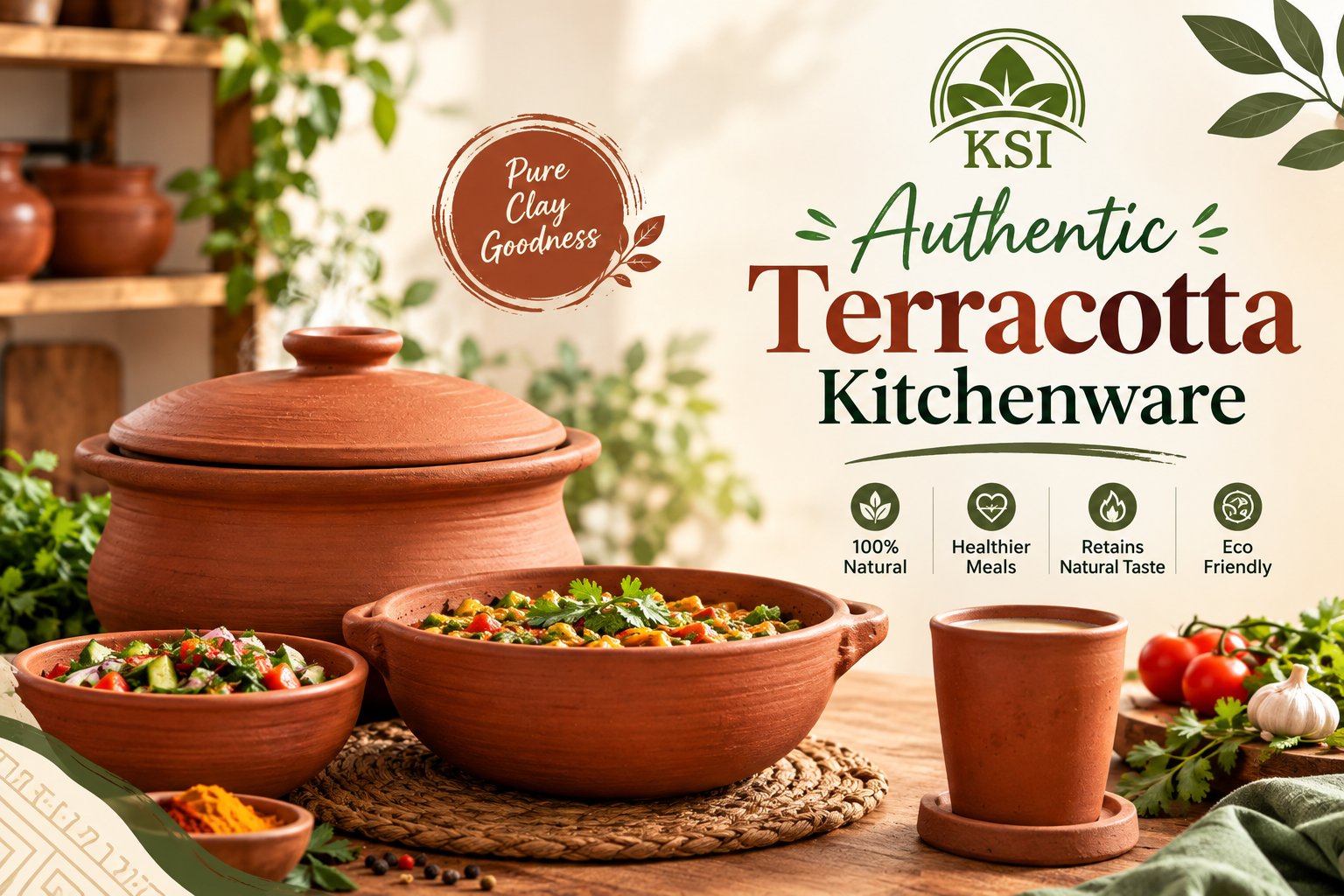
Commercial metal pans trade biological safety for raw cooking speed. Blasting a synthetic non-stick skillet with a high gas flame actively breaks down the chemical bonds, leaching industrial polymers directly into a meal. Abandoning standard aluminium for authentic terracotta kitchenware fundamentally rewires how a kitchen manages thermal energy. Raw, fired earth ignores sudden burner spikes entirely. The material traps the heat deep within its walls before pushing it slowly upward into the ingredients.
Switching to unglazed clay requires abandoning aggressive high-flame searing techniques. Natural cookware operates entirely on residual heat retention. This sustained thermal environment prevents proteins from seizing up and stops delicate dairy emulsions from breaking during long simmers. Mastering this material demands patience and a complete recalibration of your daily stovetop timing.
Operational Dynamics of Clay Cookware You Must Know
1. Thermal Absorption Rates
Natural terracotta cookware transfers burner heat instantaneously to the bottom layer of your ingredients, burning the base while leaving the top raw. Clay actively resists this rapid temperature transfer. The dense earthen walls absorb the flame’s energy and push it inward from all directions simultaneously.
This delayed thermal curve makes burning a stew physically difficult. Food continues boiling vigorously for up to fifteen minutes after you cut the gas supply. You must factor this residual energy into your timing to avoid overcooking root vegetables and braised meats once the pot leaves the stove.
2. Vapor Recirculation
The selective vapour release naturally thickens braising liquids without requiring chemical starches or prolonged reduction phases. The resulting gravies achieve a dense, sticky consistency impossible to replicate in sealed cast iron. Breads baked in these specific conditions develop a shattered, blistered crust fueled by the steady internal humidity.
Rice cooked in this way behaves differently too. The grains near the base pick up a slight char while the top stays soft, something a rice cooker with sealed steam almost never produces. Meat left inside for a few hours does not just cook through; it pulls apart on its own, loosened by moisture that never really escapes, only moves around inside the pot.
3. Acid Neutralisation
Simmering tomatoes or wine reductions in standard aluminium strips metallic ions directly into the sauce, creating a harsh, tinny aftertaste. Unprocessed terracotta carries a naturally alkaline pH level. This physical chemistry actively counteracts the harsh acids found in citrus and nightshades during a slow braise.
The chemical exchange mellows aggressive vinegar marinades and rounds out sharp tomato bases naturally. You eliminate the need to dump refined sugar into a sauce just to balance the acidity. The clay itself acts as an active, continuous seasoning agent throughout the entire cooking process.
4. The Curing Protocol
Factory-sealed pans allow immediate use right out of the retail packaging. Unfired earth shatters if exposed to a live flame without a strict initial hydration cycle. Hence, buyers must submerge the raw vessels entirely in cold water for twenty-four hours to force moisture deep into the porous walls. These traditional clay cooking pots require this initial preparation before regular use. Get these authentic pots from Kanchan Shree International at budget-friendly prices.
Following the water bath, the interior requires a heavy coating of high-heat cooking oil baked in at a low oven temperature. This polymerised fat barrier prevents liquid items from seeping completely through the unglazed floor. Skipping this mandatory hardening phase guarantees a catastrophic crack during the first stovetop deployment.
5. Managing Thermal Shock
Dumping cold broth into a blistering hot copper pan simply creates steam. Executing that same technique inside terracotta cooking vessels causes immediate structural failure. Sudden temperature drops force the fired earth to contract unevenly, splitting the base cleanly in half.
Operators must heat the vessel concurrently with the raw ingredients to ensure a synchronised thermal expansion. Adding liquids mid-braise requires heating the stock in a separate saucepan first. You must treat the material as a rigid, fragile system that punishes careless temperature fluctuations instantly.
6. Decontamination Standards
Commercial dishwashers and harsh alkaline detergents strip the accumulated seasoning layer and embed chemical soap residue deep into the clay matrix. The next meal cooked will taste aggressively like synthetic lemon degreaser. Cleaning requires nothing more than coarse salt, hot water, and a stiff fibre brush.
Heavy food carbonisation lifts off naturally if the pot sits filled with warm water for an hour. Once scrubbed bare, the surface demands complete air-drying in direct sunlight or a low oven. Storing damp clay in a dark cabinet triggers rapid, toxic mold colonisation across the interior walls.
7. Unglazed vs. Glazed Interventions
Artisans often apply a thin liquid glass coating to the interior floor of a pot to block liquid seepage entirely. This glaze creates a waterproof barrier that mimics the convenience of modern ceramic cookware. However, this commercial compromise eliminates the natural vapour exchange and acid-neutralising properties of the raw earth.
Selecting completely unglazed variants restricts the pot to specific flavour profiles. The bare walls permanently absorb the strong oils from cumin, garlic, and heavy fish stocks. Dedicated cooks maintain separate vessels strictly for distinct culinary uses to prevent cross-contamination of aggressive spices into delicate dairy desserts.
8. Structural Lifespan
Modern synthetic non-stick surfaces degrade visibly within thirty-six months of standard daily friction. A properly cured earthen pot actually hardens and darkens with continuous thermal cycling. The microscopic carbon deposits turn the coarse red clay into a slick, blackened surface that actively repels sticking proteins.
These units possess indefinite operational lifespans provided the user strictly manages the temperature gradients. A single drop onto a granite countertop will destroy decades of careful seasoning instantly. The material demands constant physical awareness and deliberate handling during every phase of meal preparation.
Conclusion
Stripping synthetic pans from your kitchen and switching to authentic terracotta kitchenware physically removes the threat of ingesting degraded industrial polymers. This material swap dictates a hard stop to rapid, open-flame searing. Forcing a raw clay vessel past its natural heating curve guarantees an instantly shattered pot.
Explore traditional terracotta cookware from Kanchan Shree International and bring the natural cooking method of clay vessels into your kitchen. Transitioning to this ancient infrastructure forces a cook to actually monitor heat retention and moisture loss manually. The resulting food carries deep, concentrated flavours impossible to replicate in modern steel chambers.