



Blog
Best Clay Kitchenware for Healthy Cooking: A Guide to Traditional Earthen Cooking

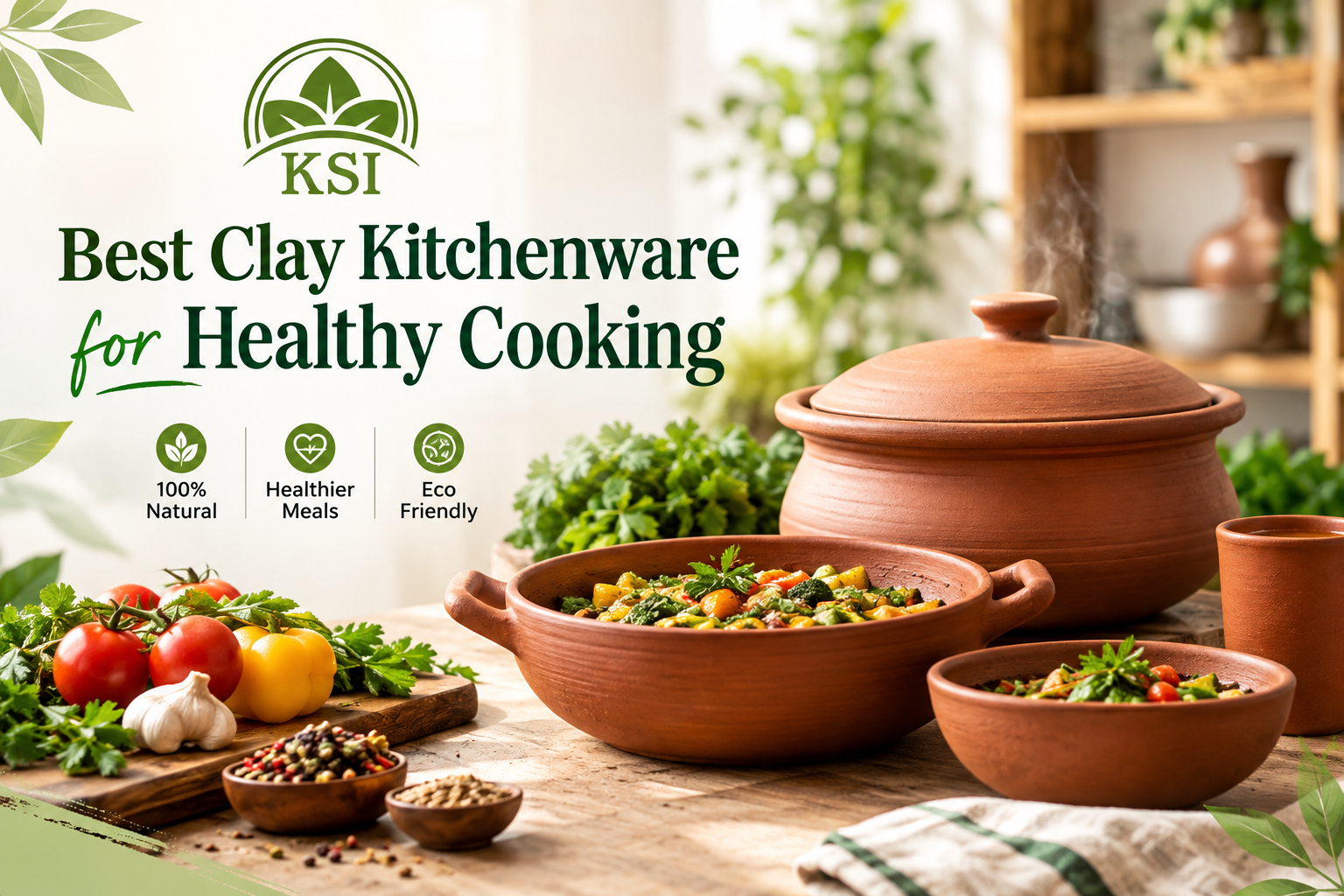
Clay cookware never really had a story attached to it in Indian homes. Someone put dal in a pot, left it on the stove, and went about other work while it cooked. Rice sat there too, curries as well, and nobody gave it a second thought. It wasn’t the kind of thing you’d choose because it said something about you or your kitchen.
Choosing the best clay kitchenware for healthy cooking does not mean replacing every steel or iron vessel you own. That would not be practical. One well-made cooking pot can be enough to see whether clay suits the way you cook. The useful things to check are quite simple: the size, the clay, the finish, the kind of heat it can take and whether you are prepared to handle it a little differently from ordinary cookware. Below, you will learn more.
8 Things to Check Before Buying Clay Kitchenware
1. Think About Your Everyday Food
The first choice can be made by looking at your own stove. What gets cooked most often? If dal and vegetable curries appear on the lunch table several times a week, a medium earthen pot could be useful. If you mostly make quick meals, buying a deep handi may leave you with something that looks good but rarely gets used.
The best earthen cookware for Indian cooking depends on the household. A pot for two people does not need to hold the same amount as one used by a family of five. Depth matters when the food needs stirring. A broad base may suit one recipe better than another. Start with the dishes you already know how to cook instead of changing your entire menu for the cookware.
2. Look at the Pot Before Buying It
Pick the vessel up. Turn it over. Look at the rim, the bottom and the inside. Handmade clayware can have small differences in shape, and that is part of its character. What you do not want is a deep crack, a badly chipped edge or a base that looks too weak to sit steadily on the cooking surface.
The surface needs a look as well. Some pots are left unglazed. Others have a glazed lining or finish. Plain clay needs more care, while glazed cookware may be simpler to wash. More important than the appearance is the purpose for which the pot was made. A serving piece and a cooking pot may look alike while being intended for completely different uses.
3. Give Slow Dishes a Chance
Unglazed clay absorbs heat at a very slow rate. The thick walls distribute warmth evenly across the base without creating isolated hot zones. This thermal retention supports dense grain dishes, heavy curries and lentils. The porous structure also keeps steam trapped inside the vessel.
Rapid cooking destroys clay pots. Searing and fast frying require sudden temperature shifts that raw earth cannot process. Exposing a cold clay vessel to a high flame causes immediate structural failure. Pouring cold water into a heated pot yields the same result. The material demands gradual heating and steady low temperatures.
4. Keep Traditional Clay Kitchenware in the Daily Routine
Traditional clay kitchenware does not have to wait for a festival meal. A small handi can go on the stove for an ordinary weekday curry. An earthen bowl can hold curd at lunch. A serving pot can come straight from the kitchen to the table. Used this way, clayware becomes part of the kitchen instead of another item sitting behind glass.
It can also change the way a simple meal looks. Plain rice served in a clay bowl, or dal brought to the table in a small handi, has a different character from the same food in steel cookware. Nothing else about the meal needs to be changed. The vessel does enough on its own.
5. Choose a Size That Will Not Become a Problem
A large clay pot can look impressive in a shop. It can also be awkward once it is full. Add a few servings of dal or curry, and suddenly you are lifting a heavy vessel from the stove. Think about that before choosing the biggest piece available.
The cooking quantity matters too. A tiny pot is frustrating when the food has to be stirred without spilling. A very large pot may be wasteful for a small meal. Storage deserves some thought as well. Clay cookware takes up space, and it is better to know where the vessel will live before bringing it home.
6. Let the Heat Build Slowly
Clay needs a gradual start. A cold pot placed straight over a strong flame is exposed to a sudden temperature change, which can damage it. The same care is important with natural clay cooking pots, especially when the vessel is moved from the stove to a cold or wet surface.
Use lower heat at the beginning and allow the pot to warm up. When the food is ready, leave the vessel alone for a while. Do not rush it to the sink. That extra cooling time is a small adjustment, but it is one of the habits that comes with using earthen cookware. Kanchan Shree International has the best kitchenware collection for you.
7. Wash It, Then Let It Dry
Thermal shock destroys hot clay vessels upon contact with water. The pot must drop to room temperature before washing. Remove all food immediately after serving. Unglazed clay absorbs organic matter, and leaving leftovers inside forces oils deep into the porous walls. Clean the surfaces thoroughly.
Move the washed pot to an open space with steady air circulation. Earthenware retains water significantly longer than metal. Storing a damp clay vessel inside a closed cabinet traps moisture and breeds mould. The heavy base and inner walls must dry completely. Verify total evaporation before placing the pot in storage.
8. Find Out What the Cookware Is Made to Do
A clay bowl sold in a pottery shop is not automatically a stove-safe cooking pot. Some pieces are made for serving. Others are decorative. Some are fired and finished specifically for direct cooking. Before using a new piece over heat, ask what it is designed for.
It is also worth checking the maker’s instructions. The type of stove, oven use, cleaning method and maximum heat can differ from one product to another. Handmade cookware is not always made to one universal specification. A quick question before purchase can prevent a broken pot later.
Conclusion
The best clay kitchenware for healthy cooking is the piece that gets used after the novelty wears off. For one home, that may be a medium pot for dal. For another, it could be a handi used for curry and a few bowls for serving. There is no need to collect every clay item available. Useful cookware earns its place by being used regularly. You get the best clay kitchenware at the best prices from Kanchan Shree International.
Clay also changes the pace of cooking. The heat needs to come up slowly, the vessel needs to cool before washing, and it should be properly dried before being put away. None of that is especially difficult once it becomes familiar. For a kitchen that already enjoys traditional Indian food, an earthen pot can be a simple addition rather than a complete change in the way meals are prepared.